26
•
ASIAN TIMBER
•
MAY/JUNE 2003
M
ain
F
eature
A
sia is beginning to follow the trend,
now well established in temperate
forest regions, of replacing large
cross-section structural timber beams and
joists with engineered wood products. As
supplies of timber from larger tropical
forest trees become more difficult to access,
engineered wood alternatives are
increasingly likely to fill this structural
timber market space in Asia, as has
happened elsewhere.
Engineered wood products provide the
building industry with an “intelligent”
structural alternative to traditional solid
timber for an expanding range of building
needs. The continuing commitment to
engineered wood product development
and growth in market share, in Asia and
elsewhere, will include new products
and new ways to satisfy housing and
other building applications.
Growth in use of LVL
The enhanced strength, lower weight
and improved cost competitiveness of
engineered wood products is
challenging both solid timber and other
building materials like steel, concrete
and plastics in most construction
markets.
Laminated Veneer Lumber (LVL) has
emerged as a significant engineered
wood product for housing and other
construction activities, according to a
recent study by the BIS Shrapnel
Forestry Group.
The study, “Laminated Veneer Lumber
Engineered wood products:
Alternatives to traditional methods
The resurgence of Asian economies and more
robust construction and furniture sectors
have presented renewed opportunities for
LVL and other engineered wood products in
a number of Asian countries.
By John Halkett
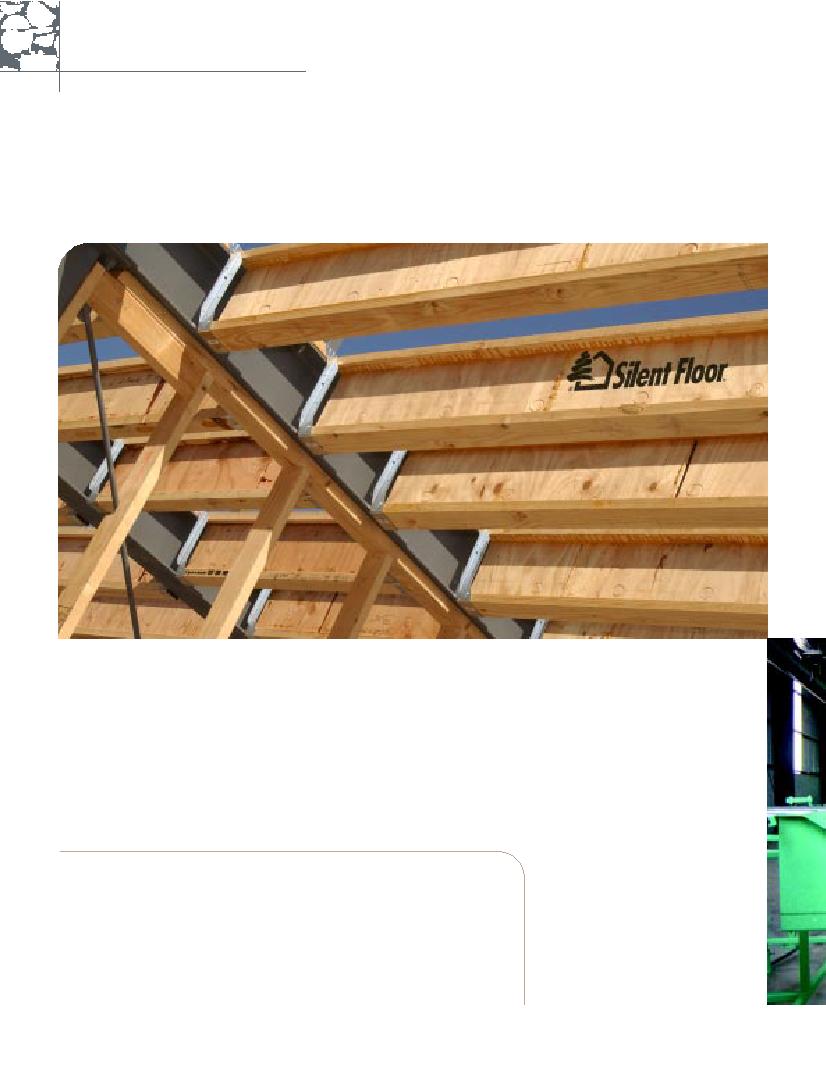
Enhanced strength, lower weight and improved cost competitiveness of engineered wood products is challenging both solid timber and other building materials like
steel, concrete and plastics in construction markets.